
Ever wondered how some businesses always manage to appear at the very top of Google, even if they aren’t a global brand? It’s not magic—it’s Search Engine Marketing.
In the fast-paced world of digital growth, understanding how to get your brand in front of customers at the exact moment they are looking for you is a superpower. Whether you’re a small business owner or a student starting your marketing journey, this guide is for you.
What is SEM in Simple Words?
If you’ve ever searched for something like “best running shoes” and noticed the first few results have a small “Ad” or “Sponsored” label next to them, you’ve seen SEM in action.
So, what is SEM in simple words? It is a digital marketing strategy used to increase the visibility of a website in search engine results pages (SERPs) through paid advertising.
While SEO (Search Engine Optimization) focuses on “earning” traffic through organic rankings, SEM is about “buying” traffic. You bid on specific keywords so that when a user types them in, your website appears prominently at the top.
SEM vs SEO: What’s the Difference?
Beginners often confuse SEM and SEO. While they are related, they are not the same.
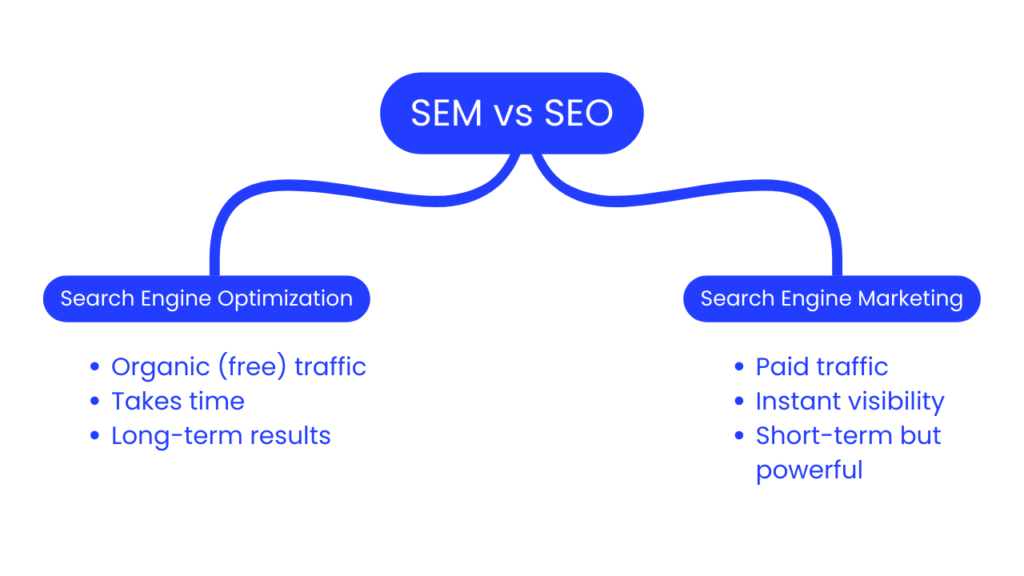
Search Engine Optimization (SEO)
- Organic (free) traffic
- Takes time
- Long-term results
Search Engine Marketing (SEM)
- Paid traffic
- Instant visibility
- Short-term but powerful
Think of it this way: SEO is planting a tree and SEM is buying fruit from the market.
Both are valuable. Most successful businesses use SEO and SEM together.
Why is SEM Important?
In a world where billions of searches happen every day, being invisible is not an option. Here is why SEM is a cornerstone of modern business:
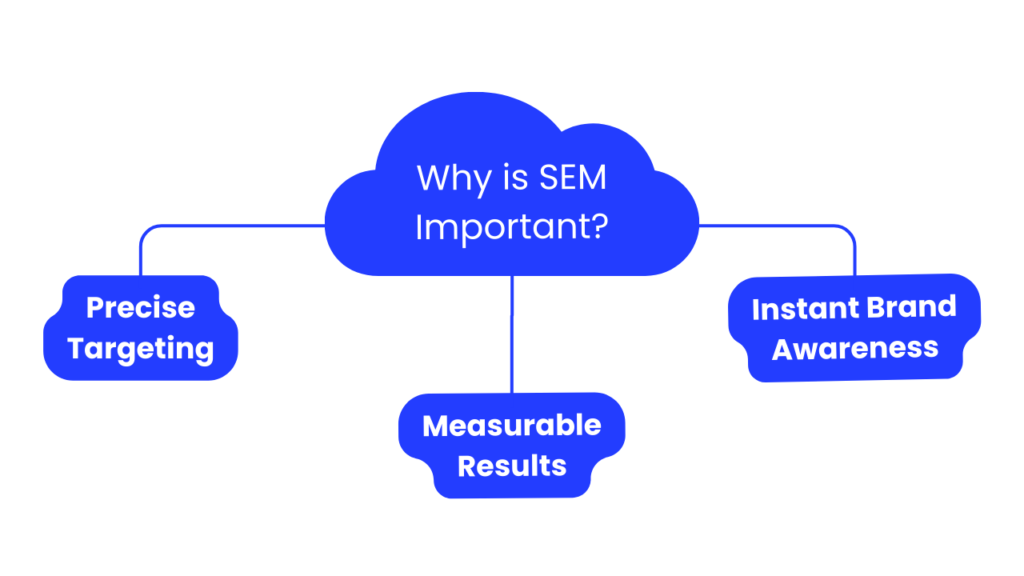
1. Instant Brand Awareness
SEO is a marathon; SEM is a sprint. If you launch a product today, you can have visitors on your site by this afternoon using a well-crafted ad campaign.
2. Precise Targeting
You aren’t just shouting into the void. SEM allows you to target people based on:
- Keywords: What they are searching for.
- Location: Where they live or work.
- Device: Whether they are on a phone or a laptop.
- Intent: Reaching people who are ready to buy, not just browsing.
3. Measurable Results
Every cent you spend is tracked. You can see exactly how many people saw your ad, clicked it, and—most importantly—how many actually bought something.
How Does SEM Work?
The backbone of SEM is the Ad Auction. Contrary to popular belief, the person who pays the most doesn’t always win the top spot. Search engines like Google want to provide a good experience, so they look at two main factors:
The Bid
This is the maximum amount you are willing to pay for a click. This is often referred to as CPC (Cost-Per-Click).
Quality Score
Google gives your ad a “grade” based on:
- Relevance: Does your ad actually match what the person searched for?
- Click-Through Rate (CTR): How likely are people to click your ad?
- Landing Page Experience: Is your website fast, mobile-friendly, and helpful?
SEM Examples in the Real World
To truly understand what is SEM in simple words, let’s look at a few common formats:
- Search Ads (Text Ads): These are the most common. They appear at the top or bottom of Google search results.
- Shopping Ads: If you search for a product (like “instant pot”), you’ll see pictures of the product with prices. These are highly effective for e-commerce.
- Display Ads: These are the visual banners you see on other websites that are part of the Google Display Network.
Common Beginner Mistakes in SEM
Even with a big budget, it’s easy to lose money if you aren’t careful. Watch out for these pitfalls:
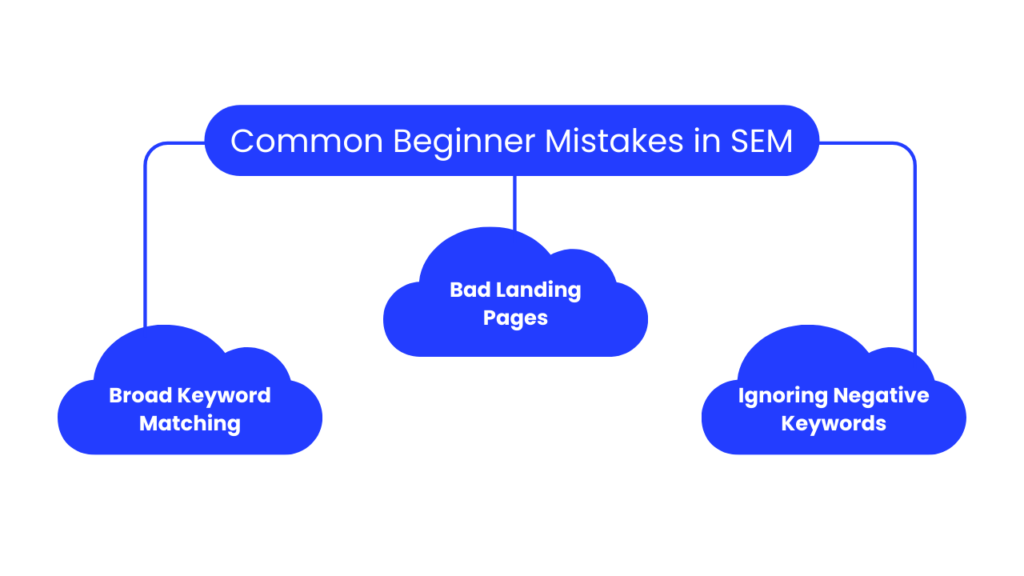
- Broad Keyword Matching: If you sell “Luxury Watches,” you don’t want your ad showing up for “Free Watch Wallpaper.” Be specific.
- Ignoring Negative Keywords: These are words you don’t want to show up for (like “free,” “cheap,” or “jobs”).
- Bad Landing Pages: If your ad is great but your website is confusing, people will leave immediately, and you’ll still have to pay for that click.
Step-by-Step Guide to Start SEM
Ready to launch your first campaign? Follow these five steps:
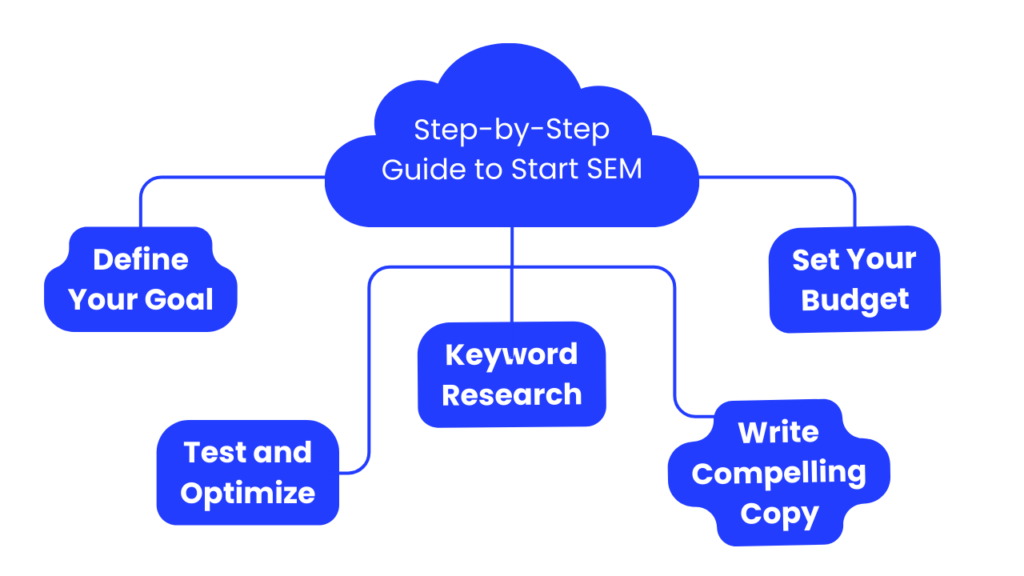
- Define Your Goal: Do you want sales, email sign-ups, or just website traffic?
- Keyword Research: Use tools like Google Keyword Planner to find out what your customers are actually searching for.
- Set Your Budget: Decide on a daily limit so you don’t accidentally spend your entire monthly budget in 24 hours.
- Write Compelling Copy: Your ad needs a “hook” and a clear Call to Action (CTA), like “Shop Now” or “Get a Free Quote.”
- Test and Optimize: Never “set it and forget it.” Look at your data weekly and tweak your bids and text.
Conclusion
SEM is one of the most powerful tools in a digital marketer’s toolkit. By understanding what is SEM in simple words—paying to appear where your customers are looking—you can jumpstart your business growth and compete with the biggest names in your industry.
It requires a bit of experimentation and a watchful eye on your budget, but the ability to turn on a “faucet” of targeted traffic is well worth the effort.
Frequently Asked Questions
1. Is SEM better than SEO?
Neither is “better.” SEO is great for long-term, sustainable growth, while SEM is perfect for immediate results and highly competitive keywords. Most successful brands use both.
2. How much does SEM cost?
It varies. You can start with as little as $5 a day. You only pay when someone actually clicks on your ad (Cost-Per-Click).
3. Does SEM help my organic SEO rankings?
Technically, no. Paying for ads doesn’t boost your organic position. However, more traffic can lead to more brand searches, which indirectly helps your brand’s overall presence.
4. What is Google Ads?
Google Ads is the most popular platform for running SEM campaigns. It allows you to place ads on Google Search, YouTube, and millions of other partner sites.
5. Can I do SEM on my own?
Absolutely! Platforms like Google Ads are designed for users of all levels. However, as your budget grows, you might want to consult an expert to ensure you’re getting the best ROI.